
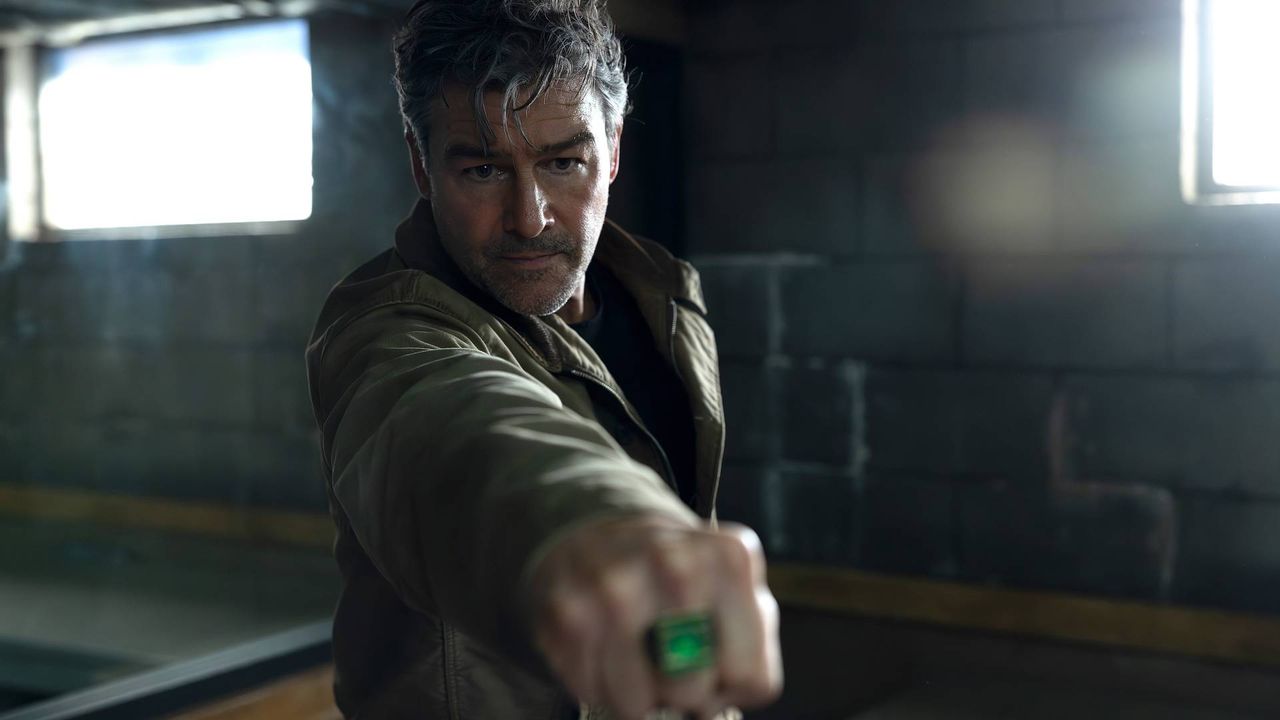
HBO’s ambitious new series Lanterns has arrived with a creative vision so bold that it has divided the fanbase before even completing its premiere episode. Unlike other superheroes who rely on advanced technology or mystical abilities, Green Lanterns draw their power solely from imagination and willpower, channeling it through their iconic power rings. Yet the show’s creators have taken an equally imaginative approach to storytelling, fundamentally reimagining what a Green Lantern adaptation can be. The series presents itself as a grounded, True Detective-style investigation rather than a cosmic space opera, pairing veteran Lantern Hal Jordan, played by Kyle Chandler, with newcomer John Stewart, portrayed by rising star Aaron Pierre. This unconventional approach has generated significant controversy among longtime fans, and the premiere’s final moments delivered an even more staggering revelation that promises to fuel debate for weeks to come.
A Deliberate Departure from Cosmic Spectacle
The first episode of Lanterns deliberately eschews the space-faring adventures and elaborate alien encounters that have defined Green Lantern stories in comics for decades. Set primarily in the fictional small town of Rushville, Nebraska, the narrative unfolds more like a detective procedural than a traditional superhero saga. When the iconic power ring does appear, it’s used for mundane tasks like creating a bottle opener or forming a protective bubble rather than conjuring massive green constructs to battle cosmic threats. Even the signature green aura that typically accompanies a Lantern’s flight is notably absent from Kyle Chandler’s portrayal of Hal Jordan. This stripped-down approach represents a conscious creative choice by the showrunners, who clearly learned valuable lessons from previous attempts to bring this franchise to life on screen.
The 2011 Green Lantern film, which starred Ryan Reynolds as Hal Jordan, stands as one of the most notorious superhero failures in modern cinema history. That production spent an estimated $200 million on elaborate CGI sequences depicting the alien world of Oa and various cosmic battles, yet the film earned devastating reviews and disappointed at the box office. Critics and audiences alike complained that the movie prioritized visual spectacle over character development and emotional resonance. Reynolds himself has frequently mocked his involvement in the project, most memorably through jokes in his later Deadpool films. The lesson from that disaster seems clear: audiences need to care about the human characters before they can become invested in interstellar adventures. Lanterns co-creator Damon Lindelof, who previously helped craft HBO’s critically acclaimed Watchmen adaptation, appears to have internalized this lesson completely, swinging the creative pendulum firmly toward character-driven drama.
The Shocking Twist That Changes Everything
After spending most of the premiere establishing the dynamic between Jordan and Stewart as they investigate strange occurrences in Rushville, the episode delivers a narrative gut-punch in its final moments. The timeline suddenly jumps forward from 2016 to 2026, revealing an older John Stewart returning to the Nebraska town a decade after the events viewers just witnessed. What he finds is devastating: the town lies in ruins, and his former mentor Hal Jordan stands frozen and lifeless outside the sheriff’s office. The implication is unmistakable—Earth’s first Green Lantern in this version of the DC Universe has been killed, and the circumstances surrounding his death represent the central mystery that will drive the series forward. Kelly Macdonald’s character Kerry, the local sheriff, shares a cryptic exchange with Stewart that suggests both know far more than they’re initially revealing.
This development did not catch everyone completely off guard. Prior to the show’s premiere, significant leaks had circulated online predicting exactly this scenario, including the dual timeline structure and Hal Jordan’s apparent demise. HBO’s legal team attempted to suppress these leaks by contacting various outlets and demanding removal of the information, an action that many interpreted as confirmation of the spoilers’ accuracy. The advance knowledge did little to soften the blow for devoted Green Lantern fans, many of whom have waited years to see Hal Jordan receive proper live-action treatment after the 2011 debacle. The character was notably absent from Zack Snyder’s Justice League films, likely due to both budgetary constraints and lingering concerns about the property’s commercial viability. Finally giving Jordan another chance at live-action prominence only to apparently kill him within the first episode struck many fans as profoundly unfair to a character who has anchored Green Lantern comics since his debut in 1959.
John Stewart Finally Claims the Spotlight
While the treatment of Hal Jordan has sparked controversy, the series’ focus on John Stewart represents a long-overdue correction of historical imbalances in superhero representation. Stewart first appeared in DC Comics in 1971, created by writer Dennis O’Neil and artist Neal Adams as one of the first African American superheroes in mainstream comics. Despite his significant presence in the source material and his prominent role in the beloved Justice League animated series that ran from 2001 to 2006, Stewart has consistently been sidelined in live-action adaptations favoring the more traditionally prominent Hal Jordan. For an entire generation of viewers who grew up watching that animated series, John Stewart simply is the Green Lantern, making his elevation to primary protagonist in Lanterns feel both appropriate and overdue. Aaron Pierre brings considerable gravitas to the role, having previously demonstrated his talents in projects like Barry Jenkins’ The Underground Railroad.
The dual timeline structure also ensures that fans of Hal Jordan won’t be completely deprived of their favorite character. Significant portions of the first season will unfold in the 2016 timeline, where Kyle Chandler’s Jordan remains very much alive and central to the narrative. Additionally, the series introduces what’s being described as a “Halogram”—apparently some form of Jordan’s consciousness or essence that persists beyond his physical death and continues to interact with Stewart in the present-day sequences. This creative choice allows the show to explore both characters meaningfully while maintaining the investigative mystery that drives the central plot forward. It’s worth remembering that death in superhero comics has always been remarkably temporary. Hal Jordan himself was killed off in the comics during the 1990s after becoming the villainous Parallax and subsequently sacrificing himself to save the galaxy, only to return years later and resume his heroic identity.
Can Lanterns Justify Its Bold Creative Choices
The ultimate success of Lanterns will depend entirely on whether its unconventional approach ultimately serves the story being told. HBO has built its prestige television reputation on programming that takes creative risks, from the narrative complexity of The Wire to the timeline manipulations of Westworld. Damon Lindelof’s previous work on Watchmen demonstrated that beloved comic properties can be successfully reimagined for television audiences, with that series earning widespread critical acclaim and multiple Emmy awards for its original approach to Alan Moore’s seminal graphic novel. If Lanterns can achieve similar success, it could establish a template for future DC adaptations that prioritize character and mystery over spectacle and action set pieces. The murder mystery framework gives the series a clear narrative engine that distinguishes it from other superhero programming while still allowing for exploration of the mythology that makes Green Lantern unique.
Whether longtime Green Lantern fans will embrace this radically different interpretation remains uncertain. The franchise has struggled for mass appeal outside of comics and animation, with the 2011 film serving as the most prominent and most damaging example of its mainstream challenges. By grounding the story in recognizable human drama while slowly unveiling cosmic elements, Lanterns may succeed in building the emotional investment that previous adaptations failed to achieve. The series clearly aims to earn its bigger moments rather than leading with them, trusting audiences to appreciate character development and mystery over immediate gratification through superhero spectacle. For viewers willing to approach the show on its own terms rather than expecting a faithful translation of comic book adventures, Lanterns offers something genuinely fresh in an increasingly crowded superhero landscape. The first episode streams now on HBO Max, with subsequent episodes continuing to unravel the mystery of what happened in Rushville and what fate befell Earth’s original Green Lantern.
Expert Opinion: HBO’s gamble with Lanterns represents a broader industry recognition that superhero fatigue requires creative solutions beyond simply adding more CGI spectacle. By treating a traditionally cosmic property as a grounded mystery, the series may finally crack the code that has eluded Green Lantern adaptations for over a decade. If successful, expect other struggling superhero franchises to adopt similar genre-bending approaches that prioritize character psychology over power displays.