
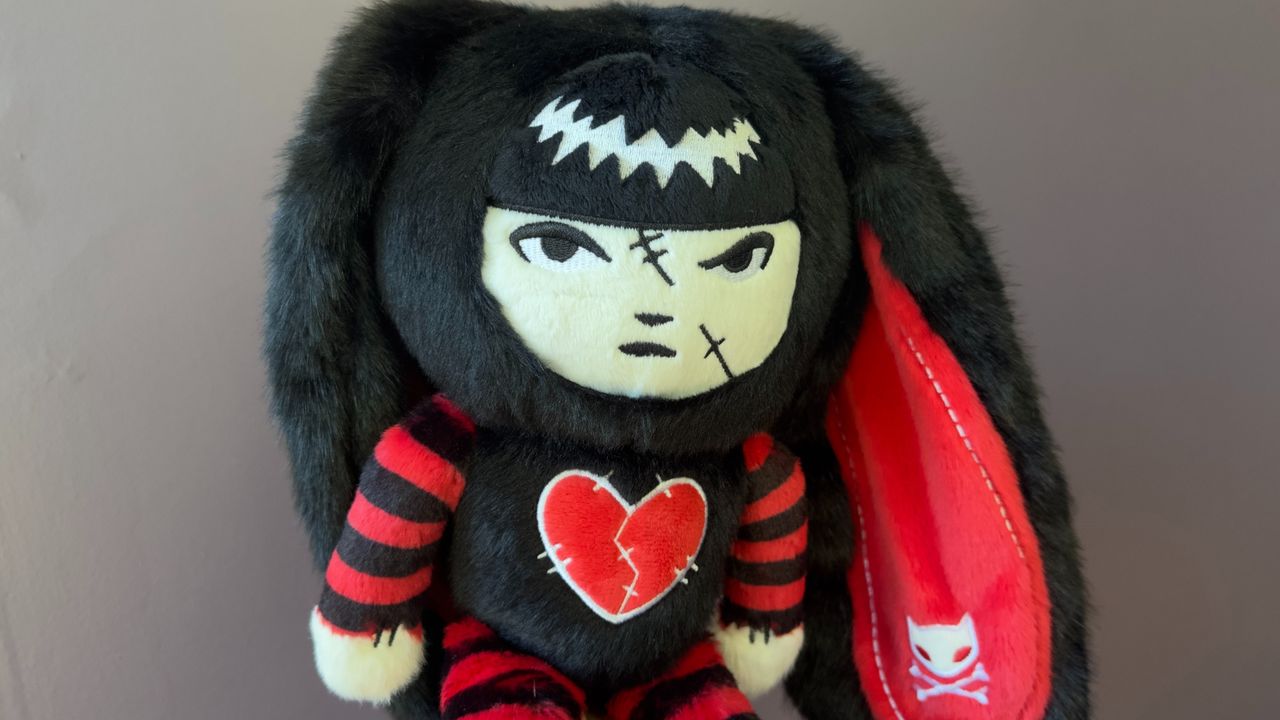
In a creative partnership nearly three decades in the making, American McGee, the legendary game developer behind Doom and the cult classic Alice: Madness Returns, has joined forces with Rob Reger, the creator of the iconic ’90s goth character Emily the Strange. The result is a limited edition plush toy that perfectly captures the dark, whimsical aesthetic that both creators have championed throughout their careers. This collaboration, which was first revealed in April, is now available for fans who have long admired the gothic sensibilities that both McGee and Reger brought to popular culture during the late 1990s and early 2000s.
The partnership feels almost destined, as McGee himself noted on social media that he and Reger originally met in 1998, precisely when he was developing his first haunted Alice in Wonderland spinoff game, which would eventually release in 2000 and become a beloved piece of gaming history. “That makes Alice and Emily creative twins!” McGee proclaimed, highlighting the parallel journeys both creators took in bringing their dark, unconventional female protagonists to audiences around the world. For fans of alternative culture, this collaboration represents a meeting of two titans who helped define the aesthetic of an entire generation of outsiders and creative misfits.
A Legacy of Gothic Gaming and Alternative Culture
American McGee’s contribution to gaming cannot be overstated. After working on groundbreaking titles like Doom and Quake at id Software, McGee ventured into darker creative territory with American McGee’s Alice in 2000, a psychological horror reimagining of Lewis Carroll’s beloved tale. The game depicted Alice Liddell as a traumatized young woman navigating a twisted Wonderland that reflected her fractured psyche. The title garnered critical acclaim and a devoted following, eventually spawning a sequel, Alice: Madness Returns, in 2011. McGee’s vision of a disturbed Alice clutching a deformed white rabbit plush became an enduring image in gaming culture, one that directly inspired his current venture, Plushie Dreadfuls.
Meanwhile, Rob Reger created Emily the Strange in 1991, initially as a skateboard graphic before the character evolved into a cultural phenomenon. Emily, a 13-year-old nonconformist dressed perpetually in black with her four mysterious cats, became an icon for alienated youth everywhere. The character appeared on merchandise, in comic books, and eventually in novels, spreading a message of individuality and intellectual rebellion. Emily’s simple design—black dress, solid tights, sensible sneakers, and those haunting black hole eyes—proved endlessly adaptable while remaining instantly recognizable. Her canonical quartet of cats—Mystery, Neechee, Sabbath, and Miles—each possess their own distinct personalities and visual quirks that fans have adored for over three decades.
The Plushie Dreadfuls Collection Expands
The Emily the Strange collaboration represents the latest addition to McGee’s Plushie Dreadfuls brand, which has gained a devoted following for its meticulously crafted stuffed animals featuring the signature scarred, button-eyed aesthetic inspired by his Alice games. The new Emily plush transforms the iconic character into an adorable yet unsettling rabbit figure, complete with a broken red heart stitched to her chest and red-and-black stripes decorating her limbs. The attention to detail is remarkable—the berry red coloring appears almost smeared onto the fur, creating an effect that suggests bleeding at the wrists, while her floppy black ears hint at the signature onyx hair hidden beneath her stitched-on hood. A cat-and-crossbones embroidery on the apple-colored interior of her ears serves as a reminder of Emily’s true companions.
The limited edition release consists of 2,000 numbered plushies priced at $49, with an additional 200 collector editions that include cards autographed by both McGee and Reger. Each set comes with carefully designed accessories that extend the gothic aesthetic beyond the plush itself. Purchasers receive a tote bag featuring Emily as a bunny spray-painting “I Love Cats” with an anarchist A, a pen dispensing smooth black ink topped with a detailed rubber mold of the character, and a fuzzy coin purse designed to match the rabbit hood. These thoughtful additions transform the purchase from a simple toy into a comprehensive lifestyle collection that speaks to the enduring appeal of alternative culture.
The Enduring Appeal of Gothic Aesthetics
What makes this collaboration particularly meaningful is how it bridges generational gaps within alternative culture. For those who discovered Emily the Strange on skateboards and stickers during the 1990s, this plush represents a nostalgic return to formative years spent cultivating outsider identities. For younger fans who discovered McGee’s Alice games or encountered Emily through more recent merchandise, it offers a tangible connection to the creative wellspring that continues to influence gothic and alternative aesthetics today. The numbered card included with each plush reinforces Emily’s original ethos with her slumber party rules: “Think for Yourself, Do it Yourself, Be Yourself. Or, better yet, be all you can’t be.”
The dark scar curving around the plush’s face connects Emily to McGee’s broader Plushie Dreadfuls aesthetic, creating visual continuity with his other creations while honoring Reger’s original design sensibilities. This careful balance demonstrates the respect both creators have for each other’s work and their shared understanding of what makes their characters resonate so deeply with fans. The collaboration serves as proof that the strange, the unconventional, and the darkly beautiful never truly fade from relevance—they simply evolve, finding new forms and new audiences while maintaining their essential spirit of creative rebellion and self-expression.
Expert Opinion: This collaboration signals a broader trend of nostalgic 1990s alternative culture properties finding renewed relevance through thoughtful creator partnerships and premium collectibles. As mainstream fashion and media increasingly embrace gothic aesthetics, expect to see more crossovers between gaming icons and counterculture brands targeting millennials and Gen Z consumers who value authenticity and artistic heritage over mass-market appeal.