
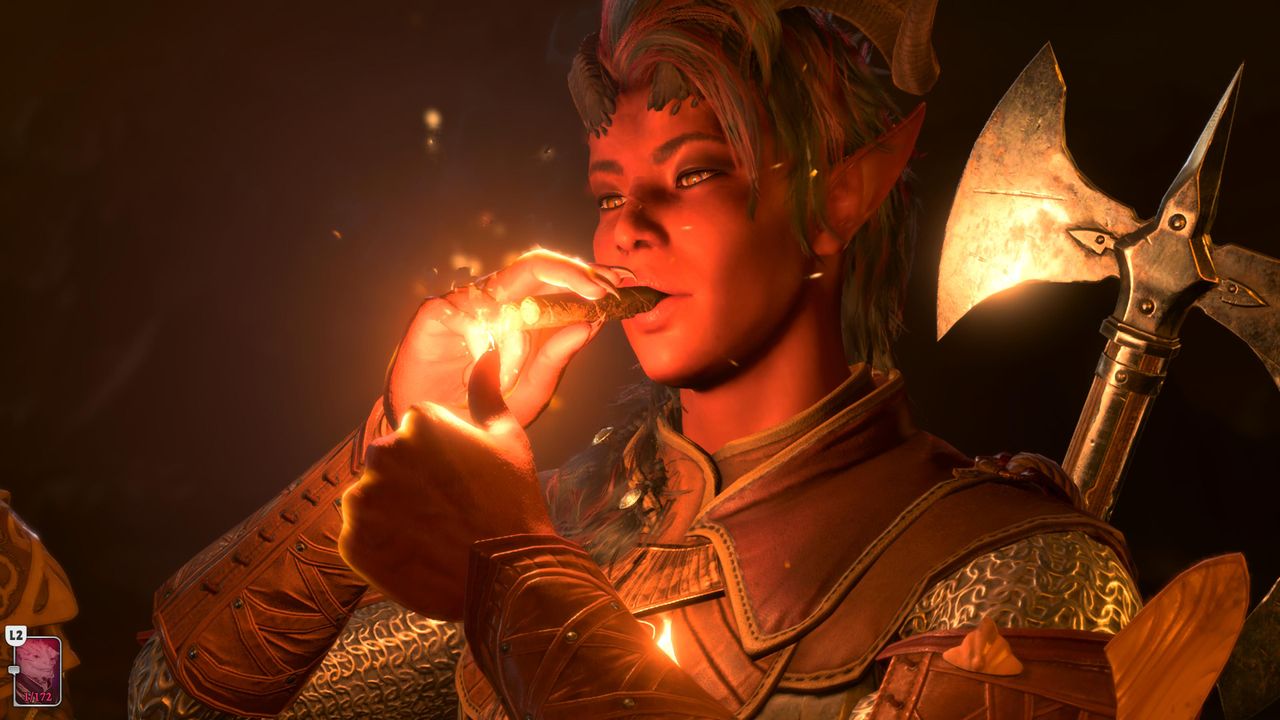
In a deliciously ironic twist that has the gaming community both laughing and shaking their heads, Larian Studios found their own livestream of Baldur’s Gate 3 terminated due to content violations. The Belgian game developer, who created the critically acclaimed role-playing game, was streaming a Dark Urge playthrough when automated systems apparently decided that the game’s devilishly attractive characters crossed a line. Publishing director Michael Douse shared the violation notice with a tongue-in-cheek announcement: “Baldur’s Gate 3 is now cancelled.”
The incident occurred during a long-running series hosted by senior communications developer Aoife Wilson, who has been guiding viewers through a Dark Urge playthrough for over a year. The Dark Urge is a special origin character option that presents players with a more sinister path through the game’s narrative, complete with violent impulses and morally questionable decisions. On August 5, 2025, the latest episode was abruptly discontinued due to what the platform identified as “Body Exposure and Sexualized Behaviors.” The timing couldn’t have been more amusing, as it coincided with Baldur’s Gate 3’s third anniversary. “Getting banned on your birthday is such a cool & edgy thing to do,” Douse quipped in his social media post announcing the violation.
The Scene That Triggered Platform Algorithms
The offending content occurred when Wilson’s playthrough reached the House of Hope, a notorious location in Act 3 of Baldur’s Gate 3. This hellish estate serves as the lair of the archdevil Raphael and contains some of the game’s most mature content. During the stream, Wilson’s character became romantically entangled with Haarlep, a shapeshifting incubus demon who serves as one of the game’s more provocative encounters. The stream team attempted to use an emergency D20 dice sticker as a makeshift censor bar, but it proved insufficient to cover all the exposure happening on screen. “Good for her. Good for us. Good for everybody,” Wilson remarked during one particularly steamy scene, maintaining her characteristic humor throughout the chaos.
The violation notice appears to have originated from YouTube, as the stream remains perfectly viewable on Twitch but is conspicuously absent from Larian’s official YouTube channel. This disparity highlights the different content moderation approaches between the two major streaming platforms. YouTube has historically maintained stricter policies regarding sexual content, while Twitch has specific categories and settings that allow for more mature gaming content. Wilson herself noticed something amiss during the stream, questioning why her custom character’s nudity was properly censored while Haarlep’s was not. “Why are Haarlep’s nipples not censored?” she asked, as the D20 censor struggled to keep pace with the demon’s movements.
Baldur’s Gate 3’s Legacy of Mature Content
Baldur’s Gate 3 has never shied away from mature themes since its full release in August 2023. The game earned widespread acclaim not only for its faithful adaptation of Dungeons & Dragons 5th Edition mechanics but also for its willingness to explore adult relationships, complex moral dilemmas, and yes, romantic encounters with a diverse cast of companions. The game allows players to pursue relationships with characters ranging from vampire spawn to githyanki warriors, and these relationships can culminate in fully animated intimate scenes. This approach represented a significant evolution from the relatively chaste romance options in earlier RPGs and contributed to the game’s cultural phenomenon status.
The game’s success has been remarkable by any measure. It won numerous Game of the Year awards in 2023 and has sold tens of millions of copies across PC and console platforms. Larian recently released a comprehensive statistics breakdown revealing fascinating player behavior data. Among the more eyebrow-raising revelations, exactly 9,122 players apparently engaged in activities that Douse suggested should result in immediate virtual incarceration. The statistics painted a picture of a player base that enthusiastically embraces both the game’s tactical combat depth and its more intimate narrative possibilities.
The Irony of Self-Censorship Failures
The most amusing aspect of this incident is that Larian was streaming their own game with full knowledge of its content, presumably with appropriate platform settings and censorship measures in place. The in-game nudity settings were apparently configured to censor the player character, but something went wrong with the NPC characters. Wilson speculated that one of the mods being used in the playthrough might have interfered with the normal censorship functions, or that a setting simply “got borked” during the stream. Whatever the technical explanation, the result was a developer being penalized by platform algorithms for content they created, published, and rated appropriately for mature audiences.
This situation highlights ongoing tensions between game developers, streaming platforms, and automated content moderation systems. Games like Baldur’s Gate 3, The Witcher 3, and Cyberpunk 2077 contain mature content that has been reviewed and rated by official classification boards. Yet streaming platforms operate under their own guidelines, often enforced by AI systems that cannot distinguish context or artistic merit. A romantic scene in an award-winning narrative RPG gets treated the same as explicit content specifically designed to violate community guidelines. For developers who want to showcase their own products, this creates an awkward situation where they must either avoid significant portions of their games or risk exactly the kind of violation Larian received.
Expert Opinion: This incident underscores a growing friction point in the gaming industry as mature-rated titles become increasingly sophisticated in their depiction of adult themes while streaming platforms maintain broad-brush content policies. As AI-driven moderation continues to expand, we can expect more high-profile false positives affecting legitimate game content. Developers may need to work more closely with platforms to establish clearer exemptions for official promotional streams of properly rated games, or face the absurd prospect of being banned from showing their own creations.