
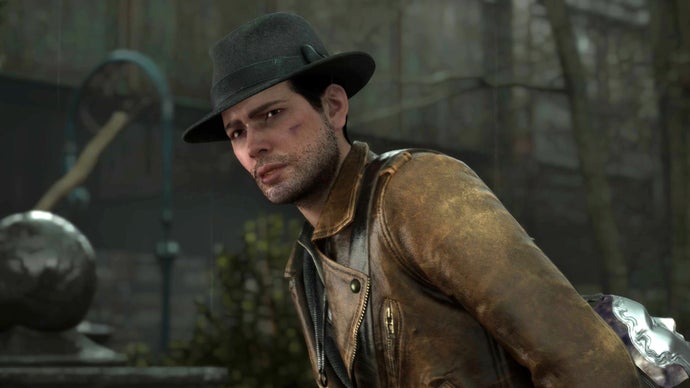
In a notable departure from its predecessor’s investigative focus, The Sinking City 2 appears to be steering the franchise toward more traditional survival horror territory. Early impressions from the game reveal a transformed experience that prioritizes atmosphere and tension over the cerebral detective mechanics that defined the original. One particularly striking moment occurs early in the game when players enter the waterlogged Miskatonic University, navigating through toppled shelves and water-damaged books as a siren announces the final evacuation call for survivors fleeing the doomed city of Arkham. This sequence captures a world caught in the throes of catastrophic change, mirroring the franchise’s own dramatic evolution.
The original Sinking City, released in 2019 by Ukrainian developer Frogwares, carved out a unique niche in the gaming landscape by blending open-world exploration with detective gameplay set in H.P. Lovecraft’s cosmic horror universe. Players assumed the role of Charles Reed, a private investigator plagued by disturbing visions who arrived in the fictional Massachusetts city of Oakmont to uncover the source of a supernatural flood. The game distinguished itself through its investigation mechanics, requiring players to piece together clues, conduct interviews, and draw their own conclusions without the hand-holding common in similar titles.
A Fundamental Change in Direction
The sequel’s shift toward conventional survival horror represents a significant gamble for the developers. While the original game received mixed reviews, it cultivated a dedicated fanbase who appreciated its thoughtful approach to detective work and its refusal to spell out solutions for players. The emphasis on deduction and investigation gave The Sinking City a distinct identity in a market saturated with action-oriented horror titles. By pivoting toward more familiar survival horror tropes, the sequel risks losing what made its predecessor memorable while potentially gaining broader appeal among genre enthusiasts.
This transition reflects broader trends in the gaming industry, where survival horror has experienced a remarkable renaissance in recent years. The commercial and critical success of titles like Resident Evil Village, Dead Space remake, and Alan Wake 2 has demonstrated strong market demand for atmospheric horror experiences. Developers across the industry have taken notice, with many studios recalibrating their projects to capitalize on this renewed interest in the genre. The Sinking City 2 appears to be following this trajectory, though whether it can distinguish itself in an increasingly crowded field remains to be seen.
The Lovecraftian Legacy
The game’s setting draws heavily from H.P. Lovecraft’s extensive mythology, particularly his stories centered around the fictional Miskatonic University and the cursed New England town of Arkham. These locations have become cornerstones of the Cthulhu Mythos, appearing in countless adaptations across various media. Lovecraft’s influence on horror gaming cannot be overstated, with titles ranging from Bloodborne to Call of Cthulhu drawing inspiration from his tales of cosmic dread and forbidden knowledge. The Sinking City franchise has always worn these influences proudly, and the sequel’s incorporation of Miskatonic University suggests a continued commitment to this rich literary heritage.
The atmospheric details described in early previews suggest that while the gameplay mechanics may have shifted, the environmental storytelling remains robust. The image of survivors abandoning Arkham as sirens wail creates a palpable sense of desperation and finality. This world-building approach, showing a civilization in collapse rather than merely telling players about it, demonstrates narrative sophistication that could help the game stand out regardless of its mechanical changes. The question remains whether these atmospheric strengths can compensate for the reduced emphasis on the investigative elements that defined the series.
Awaiting the Final Verdict
As the gaming community awaits more extensive hands-on time with The Sinking City 2, opinions remain divided on whether this transformation will ultimately benefit the franchise. Some players welcome the move toward more accessible survival horror gameplay, while purists mourn the apparent loss of the detective mechanics that gave the original its unique character. The success of this gamble will likely depend on execution rather than concept. If the developers can craft a survival horror experience that maintains the series’ commitment to atmosphere and player agency while delivering the tension and scares that genre fans crave, The Sinking City 2 could emerge as a standout title. However, a half-hearted implementation of either approach could leave the game stranded between two audiences, satisfying neither.
Expert Opinion: The Sinking City 2’s pivot toward survival horror reflects both market realities and creative ambition, but success will hinge on whether Frogwares can inject fresh ideas into well-worn genre conventions. Given the studio’s proven ability to craft atmospheric Lovecraftian worlds, the real challenge lies in making combat and survival mechanics feel as thoughtfully designed as their previous investigation systems. Early 2025 will likely reveal whether this bold shift revitalizes the franchise or fragments its identity.