
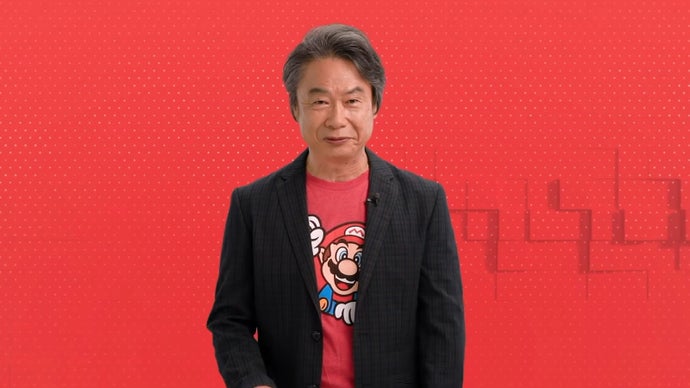
In a revealing new interview, legendary Nintendo game designer Shigeru Miyamoto has shared his perspective on the current state of the gaming industry, suggesting that consumers have become less fixated on raw hardware specifications and graphical performance than in previous console generations. The creator behind some of gaming’s most beloved franchises, including Super Mario, The Legend of Zelda, and Donkey Kong, believes that Nintendo’s commitment to delivering unique gameplay experiences sets the company apart from its competitors in ways that transcend technical benchmarks.
Miyamoto’s comments come at an interesting time for the gaming industry, as the technical arms race between console manufacturers has historically been a major selling point for new hardware. However, Nintendo has consistently charted its own course, often releasing consoles with less powerful specifications than competitors while still achieving remarkable commercial success. The Nintendo Switch, launched in 2017, exemplifies this philosophy perfectly—despite being significantly less powerful than the PlayStation 5 or Xbox Series X, it has sold over 140 million units worldwide, making it one of the best-selling consoles in gaming history.
Nintendo’s Philosophy of Innovation Over Power
The 71-year-old gaming pioneer’s perspective reflects Nintendo’s long-standing corporate philosophy that prioritizes innovation and accessibility over cutting-edge technology. This approach dates back decades and has defined the company’s strategy through numerous console generations. When competitors focused on more powerful hardware, Nintendo introduced motion controls with the Wii, portable-console hybrid gameplay with the Switch, and unique controller designs that changed how people interact with games. Miyamoto emphasized that Nintendo aims to provide “gameplay that only we can create,” suggesting the company sees its competitive advantage in creative vision rather than technical specifications.
This philosophy has historical precedent within Nintendo’s own legacy. The original Nintendo Entertainment System succeeded not because of superior graphics, but because of groundbreaking game design. The Game Boy dominated the handheld market despite having a monochrome screen when color alternatives existed. The Wii outsold both the more powerful PlayStation 3 and Xbox 360 during the seventh console generation. Each success story reinforces Miyamoto’s assertion that consumers ultimately gravitate toward compelling experiences rather than impressive specification sheets.
Changing Consumer Priorities in the Gaming Market
Industry analysts have noted a shift in consumer behavior that appears to support Miyamoto’s observations. While hardcore gaming enthusiasts still debate frame rates and resolution, the broader gaming audience has expanded dramatically to include demographics that prioritize convenience, accessibility, and family-friendly content over technical performance. The success of mobile gaming, casual gaming platforms, and Nintendo’s own offerings suggests that the market for gaming experiences extends far beyond those who scrutinize digital foundry comparisons and benchmark tests.
Furthermore, the diminishing returns of graphical improvements may play a role in this shifting priority landscape. The leap from 8-bit to 16-bit graphics was immediately noticeable to any observer, as was the transition from 2D to 3D gaming. However, the differences between current-generation and last-generation graphics, while measurable, are far more subtle to casual observers. This technical plateau may be contributing to the reduced emphasis on specifications that Miyamoto describes, as consumers struggle to perceive meaningful differences between competing platforms’ visual output.
Looking Ahead: Nintendo’s Future Strategy
As speculation intensifies about Nintendo’s next console, widely referred to as the Switch 2, Miyamoto’s comments provide insight into how the company might approach its next hardware generation. Rather than attempting to match the raw processing power of Sony and Microsoft’s offerings, Nintendo appears poised to continue focusing on unique features and exclusive gaming experiences that cannot be replicated elsewhere. The company’s stable of beloved intellectual properties, combined with its track record of innovative hardware design, positions it to maintain relevance regardless of specification comparisons.
The gaming industry continues to evolve rapidly, with cloud gaming, virtual reality, and artificial intelligence all promising to reshape how people play and experience games. In this dynamic environment, Miyamoto’s confidence in Nintendo’s differentiated approach suggests the company will continue pursuing its own path forward, betting that compelling gameplay will always trump technical specifications in the hearts of consumers worldwide.
Expert Opinion: Miyamoto’s perspective reveals a strategic clarity that has served Nintendo well for decades. As the gaming market matures and hardware capabilities converge, differentiation through unique experiences rather than incremental technical improvements becomes increasingly valuable. Nintendo’s continued success will likely depend on maintaining this creative edge while competitors chase ever-smaller graphical improvements that fewer consumers can meaningfully appreciate.